Showing posts with label material. Show all posts

Saturday, 21 December 2013

Compostable Packaging: Futher Research

Using compostable material for my transport packaging would be very beneficial to the environment and also work well with my idea of reusing the paint container as a flower pot. Perhaps some of the compostable material could be placed in the flower pot to help the soil, for example. However, in my previous blog post I had yet to find a suitable material. Sealed Air's "mushroom" packaging did not look premium, while the bamboo packaging did not appear to be strong enough and I was doubtful that this material would be able to hold two heavy paint containers. I therefore researched the subject further and, after discovering different greener packaging (see references), then discovered paperboard.

Paperboard has similar properties to paper, except that it is thicker and much stronger. It is light, can be easily cut and formed and is used mainly in packaging, making it perfect as a solution for my problem.

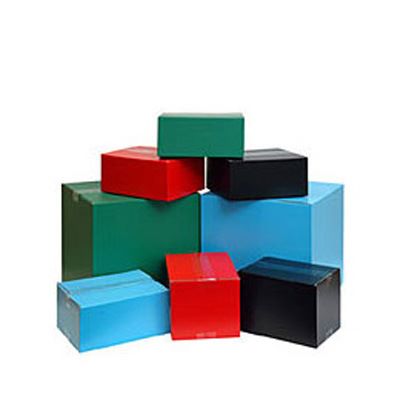
100% recycled paperboard is made completely from recovered fiber. It is recyclable as well as compostable. It is said to biodegrade at a faster rate than many food product packaging. It is also reasonably priced. Fold-Pak, a company that deals with corrugated packaging and recycling solutions, use paperboard to promote a greener image.

Paperboardpackaging.org says: "Paperboard packaging comes in several different grades that possess unique characteristics making each grade suitable for different packaging requirements and needs." 


Biodegradable 'packaging peanuts'
Packaging peanuts are a loose-fill packaging and cushioning material, which are often used to protect delicate products during their transportation.
I felt that they would be useful to include in the transportation of my paint containers, a method to ensure that my containers would be more protected and therefore more unlikely to scratch or the paint to spill. However, I wanted to make sure that these packaging peanuts were also environmentally-friendly and so did some research into biodegradable packaging peanuts. 

Before an environmental alternative was offered Compost-bin.org explains that these products were very harmful to the environment. Because they were so light weight they were impossible to collect and were constantly picked up by the wind, while they would last for years and years without composting.

A website called Foam Fabricators show that they have developed  Milex Loose Fill. This is made from grain protein and contains no petrochemicals, meaning that it is 100% biodegradable. Also, no harmful chemicals were produced during its process. On their website it explains that this product, "Is not only safe for our landfills; it can be recycled into fertilizer that nurtures the growth of future plant life. It is so safe in fact, that it’s edible."
That it encourages plant growth was a definite plus for my product, as homeowners could even place some of this packaging in the flower pot my paint container can be reused as.
Also added on their website: "Milex Loose Fill performs so well that, ultimately, less fill is needed. In fact, Milex beats polystyrene and starch fills in several areas of performance testing. This translates to less damage to shipped goods. “These are all compelling factors that add up to over-all savings for businesses”."
This would be very profitable to be in included in my design.

They can be found easily and are not expensive.


References: 
http://www.prlog.org/10750121-organic-tea-company-launches-100-compostable-packaging.html


Wednesday, 11 December 2013

Compostable Packaging

The company Sealed Air specialize in sustainable packaging. One of the most notable use of materials I found on their website was restore mushroom packaging.

This packaging is grown, rather than manufactured, and is produced out of sustainable materials. Agriculture products that would normally be disposed of, such as stalks and husks, are combined with the mushroom's root-like structure, mycelium. When left in a dark room, it self-assembles into a solid form, not dissimilar to polystyrene. This material is strong, protective, takes a few days to create and can be moulded into any shape. Not only that, but its production is better for the environment, as it is a low energy process. The packaging can also be composted after use, meaning that no material is wasted. It has even been known to improve the surrounding soil with its presence. 

It says in Sealed Air's informational video that, "Packaging should protect more than just products" and this is a strong solution to that case.  

However, I am not sure that this packaging is suitable for my target audience, as it is not overly aesthetically pleasing. Yet, this could make up the packaging of the transportation box, so it may not need to be overly attractive.


The computer company Dell also used packaging that was produced out of sustainable materials. They used bamboo to create packaging that cushioned its laptops during transportation. This was also 100% compostable. Oliver Campbell, Dell's senior manager of global packaging said: "We previously used oil-based products like styrofoam and polyethylene as cushioning, but we heard from our customers that they were interested in smaller packaging and recycled or organic materials."
I definitely think that compostable material is becoming more and more popular - and this is a extremely good thing. Paper and cardboard can only be recycled up to five times before it can no longer be reused. Compostable packaging works like paper and card yet offers a more eco-friendly image. 

Bamboo can also be used instead of polystyrene for food and drink containers:


References:
http://www.sealedairprotects.com/NA/EN/products/foam_packaging/restore-mushroom.aspx
http://www.fastcompany.com/1643493/dells-bamboo-packaging-now-compostable-too 
http://www.biomasspackaging.com/brands/410176-be-green-packaging 

Sunday, 8 December 2013

Cardboard


Thinking of how my paint containers could be transported, I researched further into paper-based products.


- The UK produces over 8 million tons of cardboard (for packaging) every year.

- Cardboard is made from cellulose fibres that are created from wood pulp. During recycling, the cardboard is soaked and agitated in order to release the fibres that can then be pulped.

- Cardboard can be recycled up to five times before the fibres eventually shorten and then disintegrate. Unlike metals such as aluminium, steel and tinplate, cardboard is not endlessly recyclable, which could cause problems in the future.

- Cardboard is often used as protective packaging to make sure that a product is transported to the consumer safely. Heritage Pioneer say on their website, Fragile content, including glass products, electronic items and chemical liquids, remain secure and protected with corrugated cardboard packaging.”

- Food products must withstand long shipping times. Corrugated card protects against moisture to keep foods from spoiling during transport.

- Card can be moulded into various shapes and comes in numerous sizes.

- Card comes at an extremely low cost. This is due to the low cost of labor and tools needed for manufacture.

- Cardboard packaging can also be easily printed on. Therefore, no extra material must be wasted to produce a label.

- Post Pack says that, “Cardboard boxes or cartons are the backbone of most transit packaging.”

- Many paper-based materials are cut from sustainable woodlands.

- Boxes can be reused.


Personal thoughts:
Cardboard seems like the obvious choice when it came to thinking out how to transport my paint. Cardboard boxes can be easily  recycled and reused, though I was surprised to find they can only be recycled up to five times. This is certainly something to consider. 

If paint spilled onto the packaging, it would  take a lot of paint to ruin the strong cardboard, yet this could happen in the carriers were not too careful. 

However, cardboard is strong, cheap and light. It could hold two paint containers without breaking, though a cardboard handle would have to be very strong to withstand the weight. 


References:
http://www.postpack.co.uk/acatalog/Packaging_and_the_Environment.html

Tinplate


- Tin plating is an industrial process where metals are coated with a thin layer of tin. This usually involves steel, though can also be done with iron and copper. Base materials like iron and steel are therefore more protected from rust and corrosion through this process. 

- Tinplate is durable and 100% recyclable. This material can be recycled endlessly without loosing quality.

- Tinplate has the strength and formability of steel and the nontoxic properties of tin.

- It is easily solderable.

- It is used largely for food and drink containers, paints, oils, pots and pants and tobacco. Recently it is also being used in toys, baking products and electronic equipment.

- Tinplate looks premium, which would satisfy my target audience.

- It is resistant to different temperatures, impervious to light, gas and diffusion.

- Very strong and light, tinplate is good at protecting products.

- Using tinplate lends a reduced carbon footprint and a saving of approximately 75% of energy consumption.

- However, when the metal is damaged or scratched, the underlying metal is left exposed, meaning that it can rust and corrode. As tin is one of the softer metals, it is easier to damage than others.

- Tinplate cannot resist freezing conditions.


Personal thoughts:
Tinplate seems to have many similar properties to steel, meaning that aluminum is still better for the environment and at reducing CO2 emissions. Tinplate, however, is commonly used for paint packaging and is therefore extremely suitable for the job.

Tinplate has many advantages, however, aluminium is slighter better for the environment and has similar advantages, so this might be the better metal to use during my project.

References:
http://www.tinplate-products.com/

Bioplastics

- Bioplastics help to reduce our impact on the planet, as they are plant-based rather than oil-based, like typical plastics. This helps to reduce our dependency on fossil fuels.

- Bioplastics can be made from corn, sugar cane, potatoes, tapioca and algae.

- They are biodegradable, compostable or fully recyclable. Since they are not made by using petroleum and other fossil fuels, they offer a reduced carbon footprint and a reduced use of fossil resources.

- European Bioplastics say that bioplastics can be used for packaging, service ware, automotive parts, electronic consumer goods and many more applications where conventional plastics are used.

- In 2011, 1.2 million tonnes of bioplastics were being produced per year, compared to 280 million tonnes of total plastic production. Bioplastics are still fairly new and are only beginning to penetrate the market.

- Coca Cola has started to use “Plantbottle”, which is made from 30% of bioplastics. According to their informational video, in the first year that they produced these products, they distributed over 18 billion Plantbottle's in more than 25 countries. Coca Cola wants to use bioplastics in all of their bottles by 2020. So far, they saved using approximately 60,000 barrels of oil by incorporating bioplastics into their design. 
 

- Bioplastics don't rust like metals, which could be useful for paint containers.

- According to the 2013 Eurobarometer survey, about 80% of European consumers want to buy products that have a minimal impact on the environment - bioplastics offer a great solution.

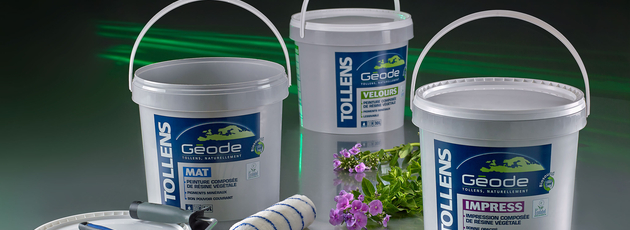
- Bioplastics are rarely used to contain paints, yet I found one strong example that has been created by the paint brand Tollens. The paint they created is plant-based, so they felt it appropriate to also use a plant-based container. Léon Mentink, product manager at Roquette, says that this packaging, “Can be used to replace the fossil-based raw material normally used for plastics... among the environmental benefits is the reduction of the carbon footprint by 65 per cent compared to polypropylene, as certified by the accountancy and consultancy company PwC.”


Personal Thoughts:
Bioplastics are quite obviously beneficial and, as seen above, can be used to contain paint. However, when thinking about my target audience I fear that they would not suit. Bioplastic containers do not look premium like metal ones and I fear this could put the audience off a purchase. They lack the sophistication that comes with the metal container. The client also expressed his distaste that the container should be transparent and many bioplastics come in this format, even if not all of them do.

References:
http://www.coca-colacompany.com/

Steel


- Steel is durable and hard-wearing. 

- Though steel has high carbon emissions during production, it can be kept in the 'recycling - loop' so that it won't go to landfill sites. It can be recycled continuously without loosing quality.

- Steel paint tins only need to be cleaned before they can be recycled.

- Using recycled steel saves 75% of CO2 emissions and 75% of the energy needed to make steel from virgin materials.

- Steel is much stronger than aluminium. It has the highest strength to weight ratio of any building material.

- All steel cans contain a minimum 25% recycled content. The remaining 75% recycled steel is used around the world for construction of bridges, automobiles, as well as wind turbines.

- 1.8 billion drinks cans are made of steel

- Steel can, however, easily rust if the paint container has not been sealed properly after use.

- Unlike aluminium, steel is prone to corrosion.


Personal thoughts:

From my research, I have discovered that aluminium is more eco-friendly than steel. Every tonne of aluminium recycled saves 9 tonnes of CO2 emissions, 95% of the energy needed to make aluminium from virgin material and 95% of greenhouse gas emissions. Recycled steel, though still very much so profitable to the environment, saves at the most 75% the energy needed to make aluminium from virgin material and 75% of greenhouse gas emissions

Aluminium, as a light, thin product, would also be more suitable for a paint container, as it will be easier to carry and transportation would be easier. 


References: 
 

Aluminium

- Aluminium is 100% recyclable. It can be melted down and reformed without losing any quality, while this process can be repeated continuously without the metal loosing form.

- 75% of all aluminium that has ever produced is currently still in productive use. 

- It is the most recycled of any industry metal.

- The emissions savings from aluminium recycling have more than doubled since 1990. The aim is to increase this by a further 50% by 2020.

- Aluminium recycling saves over 90 millions tonnes of CO2 annually.

- Aluminium recycling requires up to 95% less energy than primary aluminium production. On average 170 GJ of primary energy (most in the form of electricity) is required to produce a tonne of primary aluminium, while a tonne of recycled aluminium requires only 10 GJ.
 

- This metal is used in buildings, transport, numerous packaging, machinery, electrical applications, consumer durables etc. It is lightweight, heat-resistant and flexible. It also has the best properties to keep food and drink, toiletries and pharmaceuticals fresh and safe. This means that products stored in aluminium containers will have a longer shelf-life.

- Its finish is compatible with all printing technologies. Embossing, embedding and lacquering can also be used on aluminium.

- Aluminium is a very light material (about the quarter of steel), which helps save resources during product transportation and storage. It is one the lightest materials to offer a strong barrier against gases, light and moisture, meaning that it can help to extend the life of the products it is protecting.

- Some Life Cycle Assessments (LCA's) show that aluminium packaging contributes less than 10% of the environmental impact in a product‘s lifecycle.

- Disadvantages include that aluminium is easy to scratch, it is expensive and is not strong when compared to steel.


Personal thoughts:
It seems to me that the advantages of using aluminium greatly outweigh the few disadvantages. Aluminium is a very versatile metal, which would be perfect as a paint can container. It is strong and secure, meaning that the paint can be stored safely. I have discovered that aluminium is also a very environmentally-friendly metal. It can be recycled over and over again and it seems that people actually make the effort to make sure that it is being recycled. It is also very light, which will be convenient during transportation. 


References:
http://recycling.world-aluminium.org/en/home.html

Thursday, 28 November 2013

Materials

As Jo put in his lecture for CAT, “These things are complicated." He went on to say that choosing materials is not as easy as saying that steel, for example, is bad. You have to look at all aspects of that material and work out if it is indeed the best one for the job.

In Jo's presentation, we learned that aluminum used 170 mega jewels of energy to produce - an enormous amount. Cardboard uses 24.2 and plastic uses 90. Jo explained, Generally the more processing the material has, the more energy it takes.”


However, he also explained how production could differ depending on which country you are producing the metal in. For example, in Nigeria it takes 7.5 times as much energy than if you were to make a kilogram of steel in the UK, as UK technology is more advanced. In China, it would take twice as much energy, yet in South Korea and Denmark, it would take half as much energy to create a kilogram than it would in Britain.

I researched further and it was revealed to me that aluminum is 100% recyclable. It can also be melted down and reformed without losing any quality and this process can be repeated again and again. In fact, recycling 1 ton of aluminum saves 9 tons of CO2 emissions. So although aluminum is actually one of the most costly (on the environment too) metals to produce, recycled aluminum is actually very good. Aluminum is a very versatile metal and very light (a third of steel's weight).

When researching into what materials would be good for paint containers, I came across the metal tinplate. This metal is resistant to different temperatures, impervious to light, gas and diffusion, is strong and light and is good for protecting products. I came across the company Huber packaging and they use this metal in the packaging of their paints. For water-based products, they use cans that are lacquered on the inside. They explain, "The interior lacquer prevents the content from coming into direct contact with the tinplate and the welded seam is protected by a powder striping."


I also found that tinplate containers are reusable. In fact, they are endlessly recyclable. They do not degrade each time they are recycled like glass, paper and plastic. Another benefit of using tinplate is a reduced Carbon footprint and a saving of approximately 75% of energy consumption. I think this is a metal I would definitely consider using when designing my packaging.